<img height="1" width="1" style="display:none" src="https://www.facebook.com/tr?id=1457645420941593&amp;ev=PageView&amp;noscript=1">
A padlock sitting on a computer keyboard next to the title “Fraud Prevention Resource Center,” representing online security and fraud protection.

Knowledge That Protects You

Fraudsters continue to evolve, and so do we. This page is designed to help you learn about the latest scams, protect your accounts, and take action if something doesn't feel right. At Heartland Bank, your security is our priority.

Common Scams to Watch For

Scams are becoming more sophisticated, but knowing the signs can help you stay protected. Here are the most common scams we see and the red flags to watch for.

Bank Support Impersonation Scam

What It Is:

Fraudsters impersonate your bank's fraud department, customer service support team, or online banking help desk to trick you into revealing sensitive account information.

How It Works:

Criminals contact you by phone, email, or text pretending to be Heartland Bank, warning about "suspicious activity," "fraud alerts," or "security issues." They pressure you to share login information, verification codes (MFA/OTP), or to click a fake link to "secure your account." Once they collect these details, they reset your password, lock you out, and quickly drain funds, often into crypto wallets or other untraceable accounts.

🚩 Red Flags:

  • Someone contacts you claiming to be from Heartland Bank and asks for your password, PIN, or one-time passcode
  • A caller says there are fraudulent charges, then urges you to "verify your identity"
  • Texts saying "Tap here to confirm a suspicious transaction"
  • A website that looks like Heartland Bank but the URL is slightly different
  • Caller claims your information was used in a crime (like buying firearms) and transfers you to "law enforcement"
  • Pressure to act immediately or keep the conversation secret

What To Do:

  • Do NOT share your password or verification codes with anyone. Heartland Bank will never ask for them.
  • Hang up and call Heartland Bank directly using a verified phone number.
  • Never click links in unexpected texts or emails.
  • Bookmark the bank's real online banking login page, don't search for it.
  • If you believe you shared information, contact Heartland Bank immediately to secure your account.


Helpful Links:

FBI Internet Crime Complaint Center

FTC Scam Alerts

Identity Theft Recovery


Imposter Scams

What It Is:

Fraudsters pretend to be someone you trust, your bank, a government agency, a utility company, a grandchild, or a well-known business.

How It Works:

They contact you (phone/text/email) claiming there's an urgent issue with your account or benefits. They pressure you to act quickly, send money, or provide personal details.

🚩 Red Flags:

  • "This is urgent — act now or else…”
  • Requests for passwords, PINs, or codes
  • Caller ID that looks legitimate
  • Being told to keep it a "secret."

What To Do:

Hang up, delete the message, and call the real organization using a verified phone number.

Helpful Links:

How to Avoid Imposter Scams

Recognize the Scam


Phishing, Smishing, & Vishing

What It Is:

Fake emails, texts, or phone calls are designed to steal personal information.

How It Works:

You receive a message claiming your account is locked, a package is delayed, or a payment needs confirmation. The link leads to a fake login page or downloads malware.

🚩 Red Flags:

  • Misspellings or strange links
  • “Your account has been locked — click here.”
  • Messages from unknown numbers
  • Calls that ask you to "verify" information

What To Do:

Do not click links. Log in through the HB Mobile App or Online Banking website instead. Report suspicious messages to us.

Helpful Links:

Phishing: Don't Take the Bait

Recognize the Scam


Online Marketplace & Payment Scams

What It Is:

Scammers posing as buyers or sellers on platforms like Facebook Marketplace, Craigslist, and local swap groups.

How It Works:

Fake buyers send counterfeit checks or claim they "accidentally" overpaid and ask for a refund. Fake sellers never deliver items after receiving payment.

🚩 Red Flags:

  • Asking you to refund part of a payment
  • Insisting on wiring money or using gift cards
  • Refusing to meet in person

What To Do:

Use safe payment methods, meet locally, and never refund money from a check until it fully clears.

Helpful Links:

Buying From an Online Marketplace

Selling Stuff Online? Avoid a Scam

How to Spot, Avoid, and Report Fake Check Scams


Check Overpayment & Counterfeit Checks

What It Is:

A scam where you deposit a fake check, and the scammer asks you to send money back.

How It Works:

A scammer "buys" something or "hires" you, sends a check for too much, and asks you to return the difference. When the check bounces, you're responsible for the loss.

🚩 Red Flags:

  • Overpayments
  • Pressure to act fast
  • Requests to send money back via wire or gift cards

What To Do:

Do not spend money from an unexpected or suspicious check. Bring it to Heartland Bank first.

Helpful Link:

How to Spot, Avoid, and Report Fake Check Scams


Investment & Cryptocurrency Scams

What It Is:

Scammers promise quick, guaranteed returns or exclusive investment opportunities.

How It Works:

They push you to invest in crypto trading platforms, "risk-free" investments, or fake financial advisors.

🚩 Red Flags:

  • Guaranteed profit
  • Urgent deadlines
  • No verifiable company information

What To Do:

Check investment professionals through FINRA or SEC. Never send money to someone you met online.

Helpful Links:

Spotting Cryptocurrency Investment Scams

Know the Risks Before You Invest in Crypto

Avoiding a Cryptocurrency Scam

Romance Scams

What It Is:

Fraudsters build online relationships to gain emotional trust, then ask for money.

How It Works:

They claim to be working overseas, serving in the military, or stuck in an emergency. They then ask for help paying for travel, medical bills, or cryptocurrency transfers.

🚩 Red Flags:

  • Won't meet in person
  • Ask for money, gift cards, or crypto
  • Dramatic stories or medical "emergencies."

What To Do:

Stop all communication and NEVER send money to someone you haven't met in person.

Helpful Links:

Romance Scams

Romance Scams Will Cost You

What to Know About Romance Scams


Tech Support & Antivirus Scams

What It Is:

Fake pop-ups or callers claiming your device is infected.

How It Works:

A pop-up says something like "Microsoft Alert: Your computer is locked." The scammer then asks for remote access or payment to "fix" the issue.

🚩 Red Flags:

  • Alarming pop-up messages
  • Requests for remote access
  • Pressure to install software

What To Do:

Close the browser. Never give remote access to anyone who contacts you unexpectedly.

Helpful Links:

Tech Support Scams

Spotting Scammy Emails

How To Protect Yourself From Malware


Lottery, Prize, & Sweepstakes Scams

What It Is:

Messages claiming you've won a prize, but you must pay to claim it.

How It Works:

Scammers say you've won money, a car, or a trip. To "receive it," you must pay taxes, fees, or processing costs upfront.

🚩 Red Flags:

  • “You won — but don’t tell anyone!”
  • Fees required to claim your prize
  • Requests for bank info or gift cards

What To Do:

If you didn't enter, you didn't win. Never pay to claim a prize.

Helpful Links:

Fake Prize, Sweepstakes, and Lottery Scams

Winners are Losers in Lottery & Sweepstakes Scams

Don't Pay for a Prize (Scam)

Identity Theft

What It Is:

Someone steals your personal information and uses it without permission.

How It Works:

Your details are stolen through data breaches, phishing, mail theft, public WiFi, or lost wallets, and then used to open accounts or make purchases.

🚩 Red Flags:

  • Unknown accounts on your credit report
  • Bills for things you didn't buy
  • Missing mail

What To Do:

Use IdentityTheft.gov to report and recover. Turn on HB Alerts and check Credit Sense often.

Helpful Links:

Identity Theft & Online Security

IdentityTheft.gov 

Elder Fraud

What It Is:

Scams specifically targeting older adults.

How It Works:

Scammers claim to be grandchildren, Medicare representatives, utility workers, or tech support, and often use fear or urgency.

🚩 Red Flags:

  • Claims of emergencies
  • Isolation tactics ("Don't tell your family")
  • Requests for money via wire or gift cards

What To Do:

Talk openly with loved ones. Slow down and verify before acting.

Helpful Link:

Elder Fraud


AI-Generated Scams

What It Is:

AI-generated scams use artificial intelligence to create extremely realistic fake content, including voices, images, emails, videos, and chat messages, designed to trick you into sharing information or sending money. These scams can look and sound exactly like someone you trust.

How It Works:

Fraudsters use AI tools to:

  • Clone voices from short audio clips to impersonate family members, coworkers, or bank representatives.
  • Create deepfake videos or photos to make fake identities appear real.
  • Generate hyper-personalized phishing emails or texts that reference your life, job, or relationships.
  • Build fake chatbots or customer service agents that mimic real companies.
  • Bypass security checks by sounding or appearing human enough to slip past traditional verification.

These tools allow scammers to launch highly convincing schemes in seconds, often faster than victims realize something is wrong.

🚩 Red Flags:

  • A call from a loved one who sounds "slightly off" and is urgently asking for money.
  • Messages that include personal details you've never shared with the sender.
  • Unexpected requests for wire transfers, gift cards, or payment apps.
  • A business, bank, or government agency contacting you through unusual channels (social media, WhatsApp, etc.).
  • Videos, images, or audio clips that seem a bit distorted, robotic, or out of sync.
  • Customer service chats that don't follow standard procedures or cannot verify information.

What To Do:

  • Pause and verify. Call the person back using a number you already know, not the one they contacted you from.
  • Use a second verification method. If your "boss" texts you, call them. If your "child" calls you, send them a text.
  • Never send money under pressure. Slow down and confirm the situation first.
  • Avoid sharing audio or video publicly that scammers could use to clone your voice.
  • Enable additional account protections like HB Alerts and two-factor authentication.
  • Report suspicious activity to Heartland Bank immediately so we can help secure your accounts.

Helpful Link:

Scammers Use AI to Enhance Their Family Emergency Schemes


Secure Your Accounts

Protect your money with powerful tools designed to keep you informed, in control, and confident.

We want you to feel secure every time you bank, whether you're checking your balance, making a purchase, or managing your cards on the go. These tools put real protection right at your fingertips, helping you spot suspicious activity early, strengthen your login security, and safeguard your personal information.

HBMobile

HB Mobile

Secure, convenient banking from anywhere.

Do More With HB Mobile:

✔ Check Balances & Activity

✔ Lock/Unlock Your Debit Card

✔ Set Travel Notifications

👉 Learn More About HB Mobile

15-1

HB Alerts

Real-time notifications that help you spot suspicious activity fast.

Includes Alerts For:

✔ Purchases & Withdrawals

✔ Transfers & Deposits

✔ Login Attempts & Profile Changes

👉 Learn More About HB Alerts


61

Credit Sense

Your free built-in credit monitoring tool.

Credit Sense Helps You:

✔ Check Your Credit Score

✔ Get Alerts for Unusual Activity

✔ Understand & Track Your Score

👉 Learn More About Credit Sense


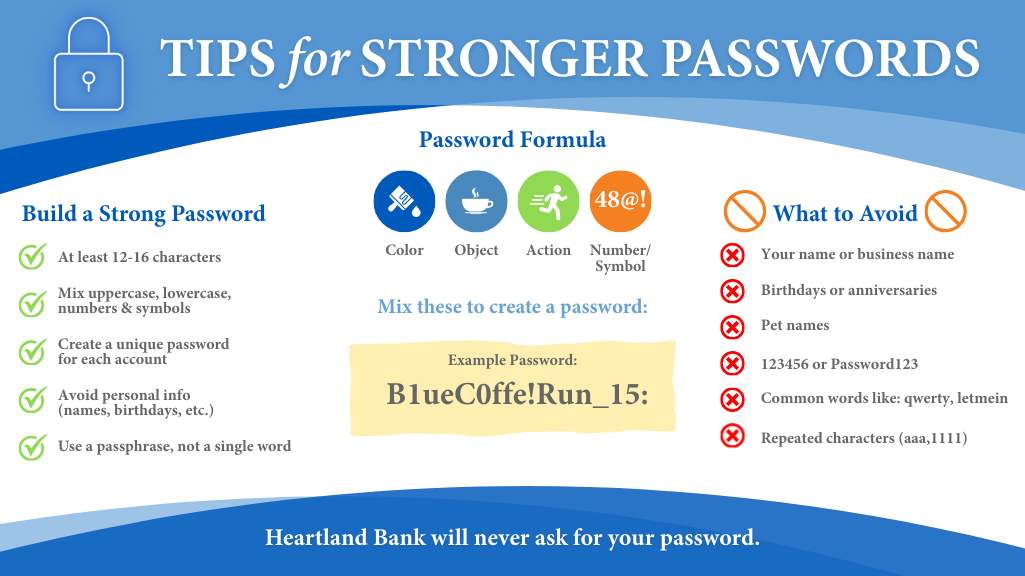
 Infographic titled “Tips for Stronger Passwords” showing how to build secure passwords using 12–16 characters, mixed symbols, and a passphrase formula. It also lists what to avoid, such as personal information, common passwords, and repeats, and notes the bank will never ask for your password.


Helpful & Trusted Resources
 
You don't have to fight fraud alone. These trusted sources offer clear, reliable information and reporting tools.
 

🛡 Federal Trade Commission (FTC)
consumer.ftc.gov — Learn about current scams, file a complaint, or get recovery help.

🔍 Report Fraud
reportfraud.ftc.gov — Submit fraud reports directly to the FTC.

🆔 Identity Theft
IdentityTheft.gov — Step-by-step recovery plans if your identity is stolen.

📵 National Do Not Call Registry
donotcall.gov — Reduce unwanted telemarketing calls.

💳 Consumer Financial Protection Bureau (CFPB)
consumerfinance.gov — Financial safety tips and complaint tools.

🏛 IRS Tax Scams & Alerts
irs.gov — Spot tax fraud and phishing scams.

👮‍♂️ FBI Internet Crime Complaint Center (IC3)
ic3.gov — Report online scams, cybercrime, and fraud.

🔎 Better Business Bureau (BBB) Scam Tracker
bbb.org/scamtracker — Search for scams reported in your area.


FEATURED POSTS

News & Stories Cybersecurity

Before You Celebrate Your Big ‘Prize’… Read This.

By  Heartland Bank    On 17 December 2025
For many people, the dream phone call or check in the mail from a sweepstakes or lottery company feels exciting, maybe even life-changing. Scammers know that, too. According to ...
News & Stories Cybersecurity Security

🚨 Payroll Scam Alert: Protect Your Business Before It’s Too ...

By  Heartland Bank    On 7 November 2025
At Heartland Bank, we care deeply about your financial security — because when our local businesses thrive, our communities thrive. Recently, we’ve seen an increase in a specific ...
News & Stories Cybersecurity Security

Scam Alert: Fraudulent calls circulating in our area

By  Heartland Bank    On 5 November 2025
At Heartland Bank, your security is our top priority. Recently, we’ve been made aware of a scam targeting customers with phone calls claiming to be from the fraud department. ...
Heartland Bank team member at a computer with text reading “Connect With Our Team — We Are Here to Help” and a green Contact Us button.